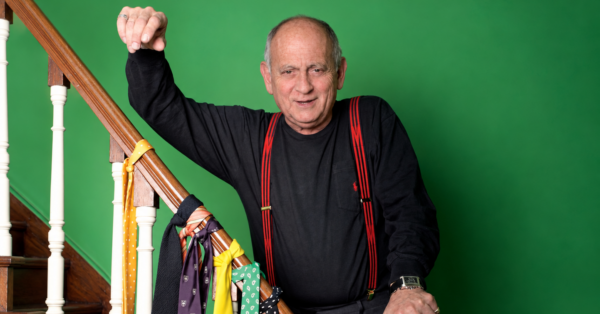
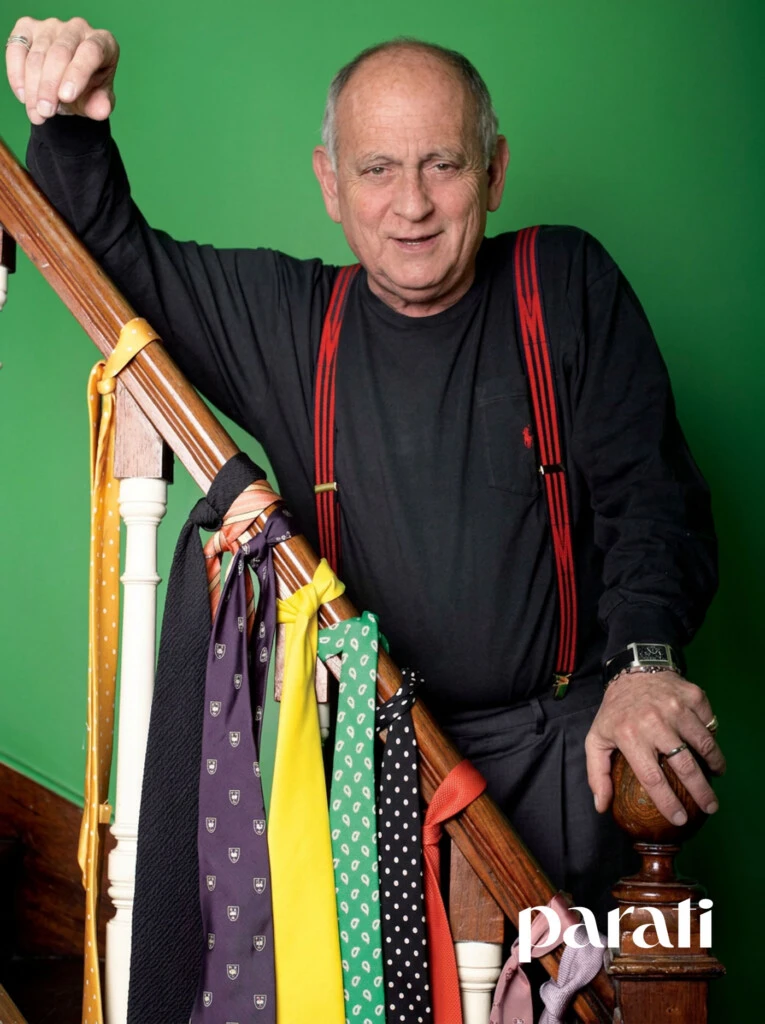
Chiche Gelblung had a way of dressing that was as recognizable as his voice, his manner of asking questions, and his on-camera persona. He didn’t need to follow trends or respond to the traditional rules of masculine elegance. All it took was putting on a double-breasted suit, adding a patterned waistcoat, choosing an unexpected tie, and stepping out into the world once again as Chiche.
The journalist, who died this Wednesday, September 9, at the age of 82, built over his long career an aesthetic of his own. His looks could be both classic and extravagant at the same time: they started from traditional pieces of the masculine wardrobe, but always incorporated some detail capable of breaking the formality.
An intensely colored shirt, visible cufflinks, a slightly askew tie, bold socks, a pocket square, or a shiny brooch could completely transform the ensemble.
He wasn’t aiming to dress correctly. He aimed to dress like himself.
Chiche Gelblung, a style that did not follow the rules
At a time when most hosts chose dark suits and discreet combinations, Chiche dared to play with clothing.
He had a fondness for wide-lapelled double-breasted suits, a silhouette associated with 1980s men’s fashion. He paired them with waistcoats, patterned shirts, and ties that didn’t necessarily respect the classic rules of color.
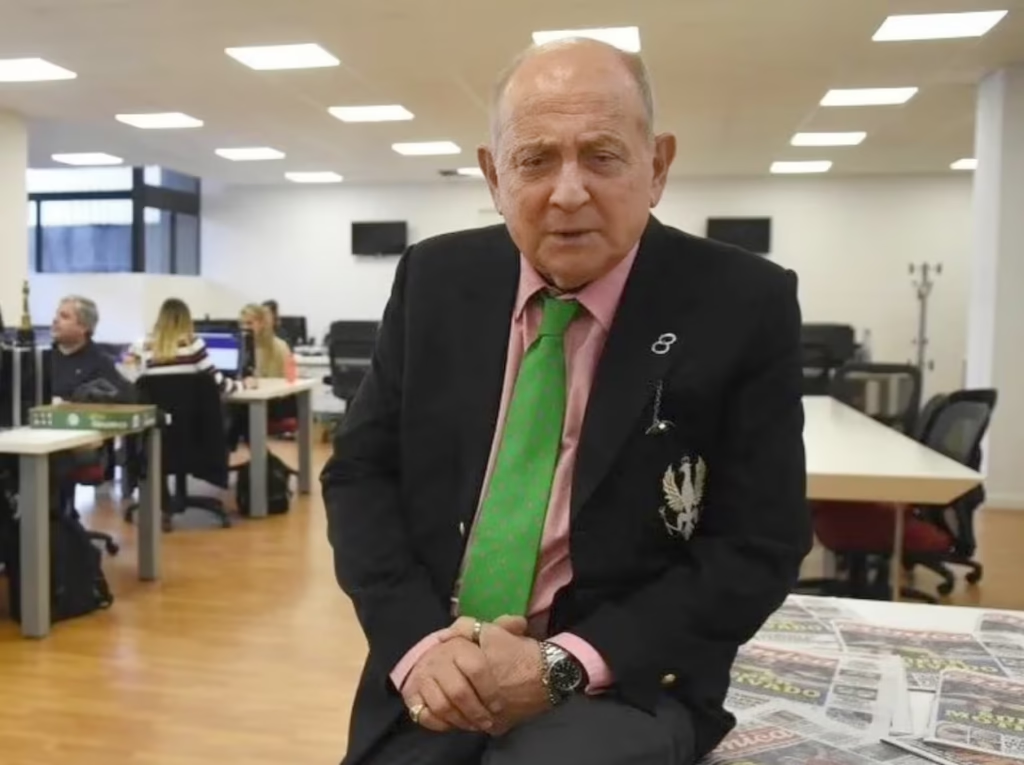
At the 2023 Martín Fierro Awards, for instance, he chose a look that was described as vintage: a double-breasted suit, a patterned waistcoat, and a tie worn with that deliberate disorder that was part of his image.
Nothing seemed overly calculated and yet everything ended up building an unmistakable visual identity.
Double-breasted suits and vests: his great allies
The suit was a constant in Chiche’s wardrobe, though he never wore it in a predictable way.
He preferred roomy jackets, many times double-breasted, with structured shoulders and an imprint that recalled other decades. Underneath could appear a plain or patterned waistcoat, a striped shirt, and a colored tie.
That layering of textures and motifs was one of the most distinctive features of his looks. While traditional men’s fashion recommended moderation, Chiche leaned toward adding more elements.
The result might seem excessive to anyone else. In him, it worked because it was not a pose: it was the translation of his personality.
Cufflinks, socks, and ties: the accessories that broke formality
Cufflinks were another of his signature stamps. He wore them over shirts in white, light blue, or patterned tones and, on occasions, made them the focal point of the outfit.
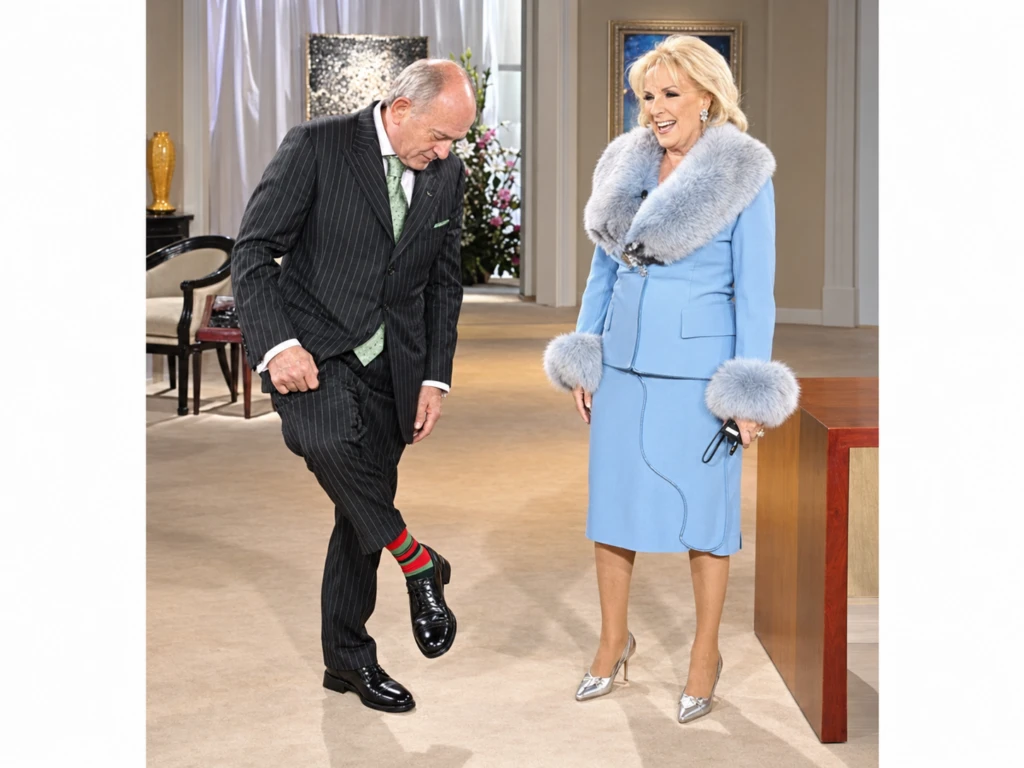
He also dared to combine colorful socks, pocket squares, cufflinks, and bold ties. He could choose black cufflinks with red stitching or coordinate a pocket square with a green tie. For him, almost any combination was possible.
Unlike many men who delegated the choice of their clothes, Chiche said he dressed himself. Deciding what to wear was also a way of expressing himself.
He didn’t seem overly concerned whether the colors matched according to conventions. His intuition surpassed any style manual.
His particular relationship with colors
Chiche avoided muted tones. He enjoyed yellow shirts, green ties, and combinations with strong contrasts.
He once expressed his dislike for brownish tones and made it clear that he wasn’t willing to go unnoticed. His universe was much closer to color, patterns, and accessories with character.
His way of dressing shared something essential with his approach to journalism: there was no beige. Neither for reporting a story nor for assembling a look.
Cristina Seoane’s detail in one of his looks
His style also carried small gestures of love. At the 2019 Martín Fierro de Cable awards, Chiche arrived with his wife, Cristina Seoane, and wore on the lapel of his suit a shining bijou brooch created by her.
The accessory brightened a formal outfit, but it also carried emotional value. Cristina, a former model and photographer, knew the world of fashion and image very well. She was his partner for 49 years and stood by him on red carpets, celebrations, and difficult moments.
That brooch summed up their story: a detail created by her that he proudly wore over his heart.
An imperfect and deeply personal elegance
In Chiche, a tie could be slightly askew and a waistcoat could visually compete with the shirt. That imperfection was part of his appeal.
He did not aim for a polished image or quiet elegance. He preferred expressiveness. His garments spoke before an interview began and anticipated the arrival of a man with strong opinions, humor, and a curiosity hard to contain.
Even during his final months, when health issues confined him to a wheelchair, he kept his sharp shirts and his classic cufflinks. Physical frailty did not erase what defined him.
Chiche Gelblung’s looks, an extension of his personality
Fashion can be trend, belonging, or refuge. For Chiche, it was above all identity.
His wardrobe accompanied the different stages of his career without ever losing its essential codes. There were dark suits for grand ceremonies and more relaxed combinations for television, but always a personal detail appeared: a print, a color, an accessory, or a distinctive way of wearing clothes.
Chiche Gelblung was not a fashion icon in the traditional sense. He was perhaps something more interesting: a man who found his own style and stayed true to it throughout his life.
The programs, the sets, and the trends could change. He kept choosing his double-breasted suits, his cufflinks, his waistcoats, and his ties without fear of color.
Because Chiche did not merely have a unique way of doing journalism. He also had a unique way of stepping onto the stage. And merely by looking at one of his looks you could tell that he had arrived.
Archive: Gustavo Ramírez