
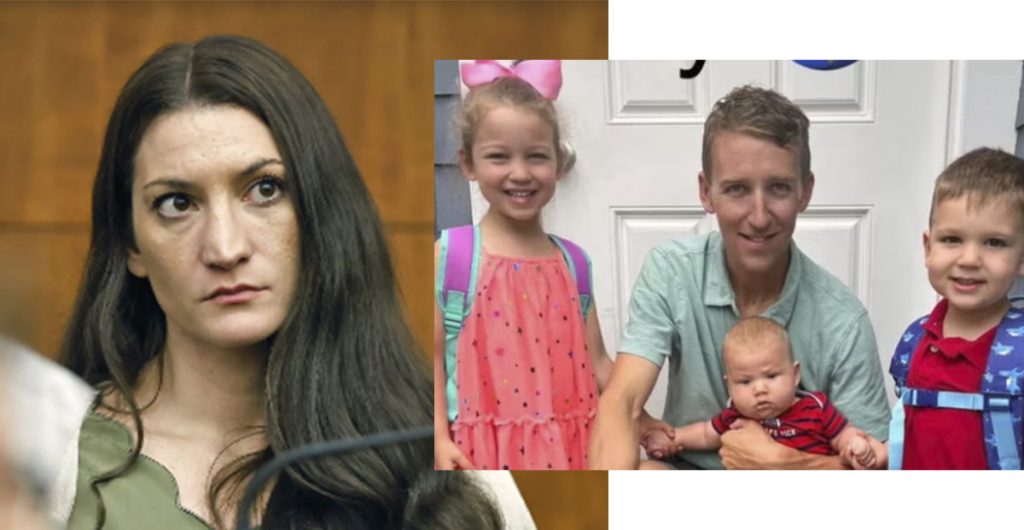
The trial of Lindsay Clancy, accused of killing her three young children in 2023, centers one of its main axes on her mental health. Her defense contends that, at the time of the events, she was suffering from a postpartum psychosis. The diagnosis, however, is part of the judicial discussion and has not been confirmed as such.
Beyond the case, postpartum psychosis is a rare but serious illness that can appear after the birth of a baby. The National Institute of Mental Health (NIMH) defines it as a mental disorder that can cause delusions, hallucinations, mania, paranoia, and confusion. It considers it a psychiatric emergency requiring immediate attention.

What is postpartum psychosis?
Postpartum psychosis involves a disruption of contact with reality. The person may have thoughts or perceptions that do not correspond to what is happening around them and, in some cases, may not be aware that they are experiencing an illness.
According to the National Health Service (NHS) in the United Kingdom, symptoms usually begin suddenly during the first two weeks after childbirth, even within the first hours or days. It is a relatively rare condition: it affects about one in 1,000 women who give birth.
The American College of Obstetricians and Gynecologists (ACOG) estimates an incidence of between one and three cases per 1,000 births and notes that there is a higher risk in women with bipolar disorder.

What are the symptoms?
Among the signals that may appear are:
- Hallucinations, such as hearing or seeing things that are not present.
- Delusions, i.e., false beliefs that the person believes to be true.
- Paranoia or extreme distrust.
- Confusion and disorientation.
- Sudden mood changes.
- Mania, with a lot of energy, racing thoughts and a marked decrease in the need to sleep.
- Unusual or disorganized behaviors.
One of the aspects that makes the surrounding environment especially important is that the person may not recognize that they are ill. Therefore, family members, partners, or friends may be the first to notice that something is not right.

Is it the same as postpartum depression?
No. Although both can appear after birth, they are different conditions.
Postpartum depression can cause persistent sadness, anxiety, guilt, hopelessness, exhaustion, sleep problems, and difficulties bonding with the baby. It is much more common than postpartum psychosis.
The fundamental difference is that postpartum psychosis can entail a loss of contact with reality, with hallucinations, delusions, paranoia, and confusion.
It should not be confused with the baby blues, a common emotional disturbance in the first days after birth that usually resolves on its own.
Who is at higher risk?
It can occur even in women with no psychiatric history, but some factors increase the likelihood. Among them are bipolar disorder, a history of postpartum psychosis, and a family history of certain mental illnesses.
Therefore, those with known antecedents may require specialized monitoring during pregnancy and after birth.

Why is it a psychiatric emergency?
Postpartum psychosis can worsen rapidly and affect the person’s ability to distinguish reality from what is not real. Both the NIMH and the NHS recommend immediate medical care and note that treatment often requires hospitalization.
In the face of hallucinations, delusions, severe confusion, paranoia, or behavior indicating a loss of touch with reality after childbirth, do not wait for symptoms to disappear on their own. It is important to seek urgent medical attention.
ACOG also regards acute psychosis as a condition requiring immediate intervention and emphasizes the importance that family and close contacts recognize warning signs.
Is there treatment?
Yes. Recovery is possible with professional treatment. The approach is usually hospital-based and may include antipsychotic medications and mood stabilizers; in certain situations other treatments may also be used.
The urgency of acting quickly is central: the sooner the condition is evaluated, the sooner the appropriate treatment can begin.
In the case of Lindsay Clancy, postpartum psychosis is the hypothesis advanced by her defense to explain her mental state at the time of the killings. The trial will determine what happened and what her capacity to understand her actions was. But, from a medical standpoint, one thing is clear: postpartum psychosis is a serious disorder that requires recognition and urgent attention, and should not be confused with postpartum depression or the usual emotional fluctuations of the early days of motherhood.