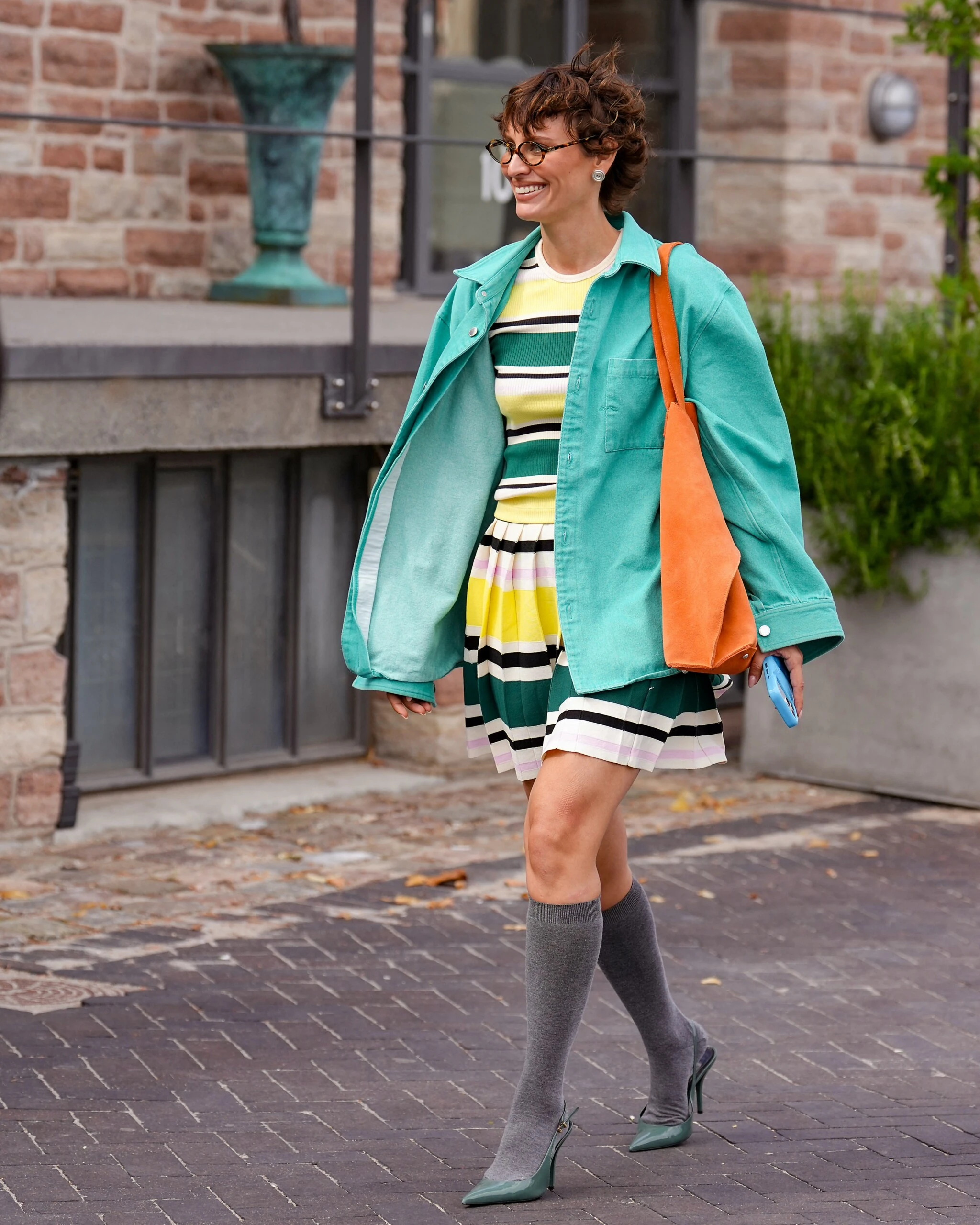
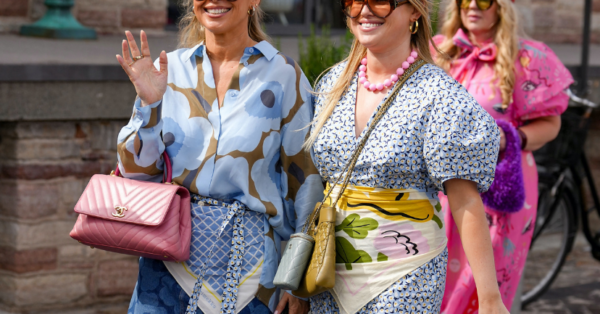
A silk scarf tied around the head for cycling, an inherited lace tunic peeking out beneath a sporty windbreaker and some loose-cut pants recalling decades past. The scene did not come from the dressing room of a hyper-produced celebrity nor from an impulsive purchase in a luxury shop; it happened on the sidewalks of Denmark during the most recent August edition of the Copenhagen Fashion Week.
On the occasion of its 20th anniversary, the Nordic streets functioned as a real, intimate, and, above all, deeply inspiring runway.
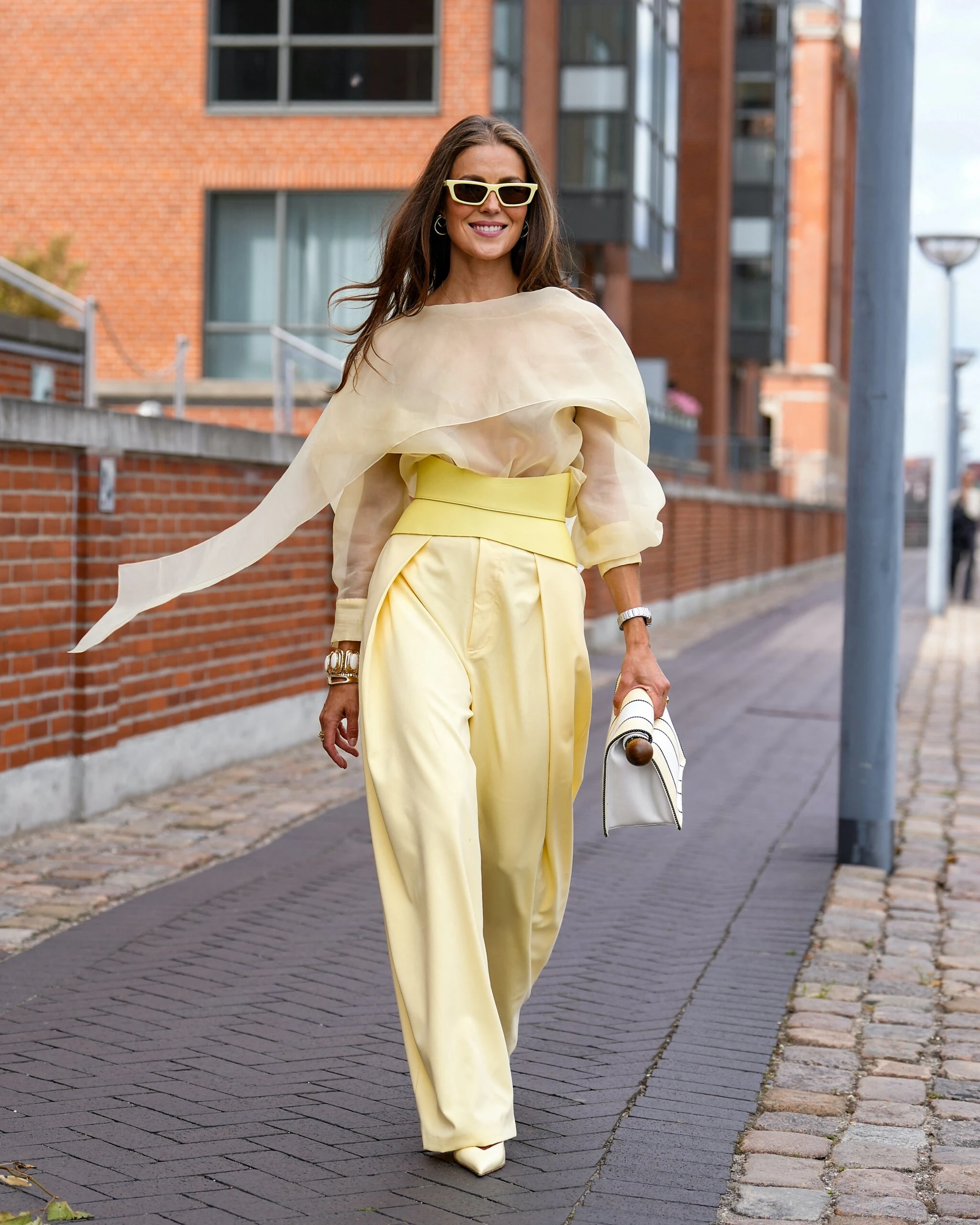
Far from the rigid demands of Paris or Milan, Nordic street style reaffirmed Copenhagen as the fifth fashion capital of the world thanks to a liberating premise: true elegance is not about accumulating new garments, but about applying creativity to what already exists. The Danish showcase made clear that a storied wardrobe—one that resides in our own closet, in our mothers’ closets, or in grandmothers’ chests—is today the main source of trend.
The beauty of reuse: creativity over shopping
In a context where circular fashion and sustainability have ceased to be theoretical discourses and have become everyday styling practices, Copenhagen proposed looking at the wardrobe with different eyes. Having style this season does not mean sprinting to consume, but rescuing well-preserved pieces, valuing the noble fabrics of other eras, and daring bold layerings.
The Scandinavian formula demonstrates that a vintage wardrobe or garments from past seasons is more than enough to assemble current combinations. The key lies in decontextualizing those family treasures: taking pieces with romantic or formal aesthetics and crossing them with urban and functional elements to achieve a look full of personality and effortlessness.
Lace and scarves: inherited treasures that conquer the street
Among the most repeated fashion gestures on Nordic streets, the prominence of retro textures was absolute. Vintage lingerie and lace dresses — those that were often kept exclusively for special occasions — came out into the daylight paired with tailored jackets, windbreakers, and urban footwear. This contrast between the delicacy of the old fabric and the practicality of the sportswear became the unquestioned hit of the event.
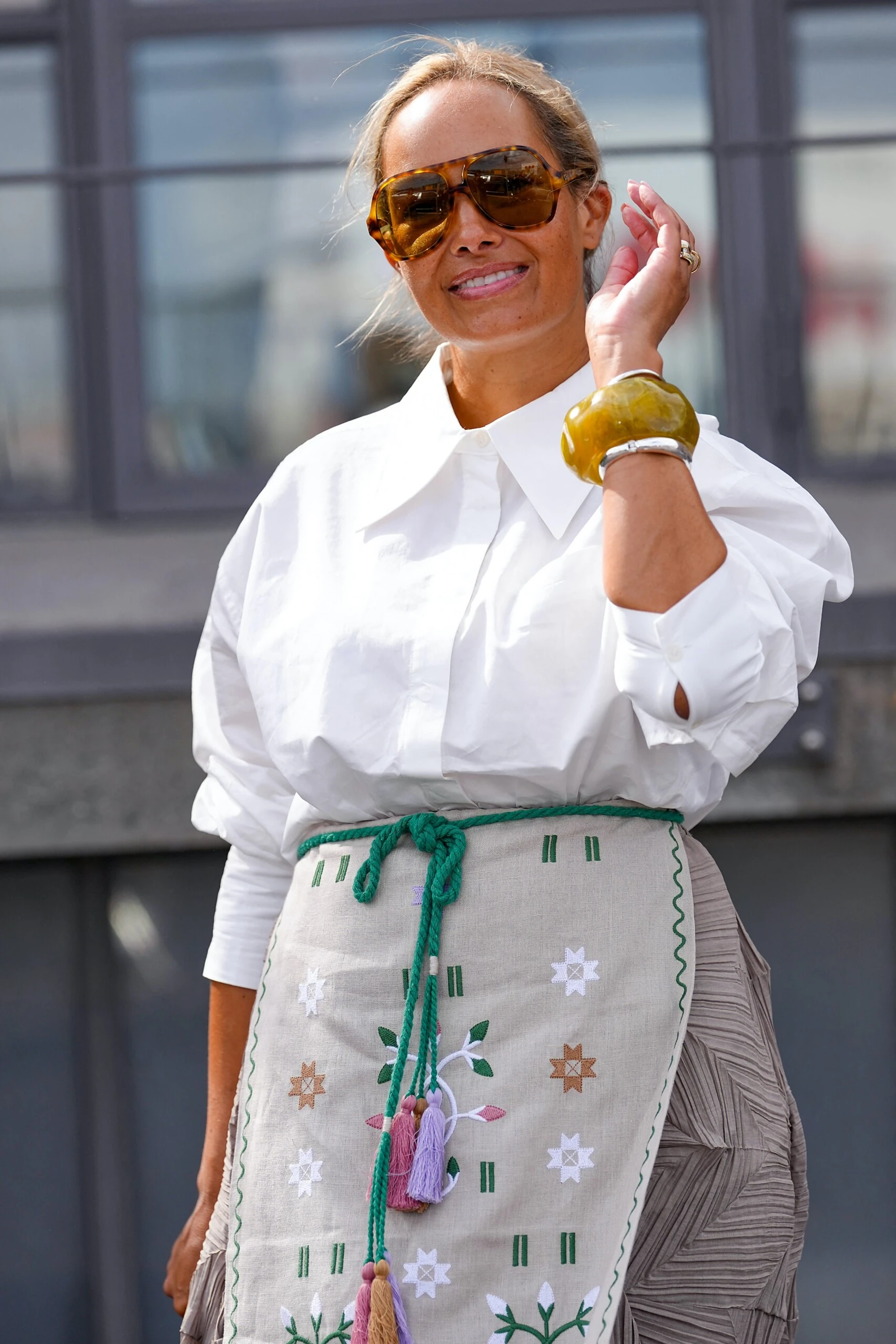
To this, the omnipresence of the silk scarf was added, probably the most versatile vintage piece and easiest to inherit. On Copenhagen’s urban runway, this classic accessory was worn in multiple ways: as a headband covering the hair, tied traditionally at the neck, cinched at the waist to define the silhouette, or tied to the handles of bags, lending a splash of color and distinction to the simplest ensembles.
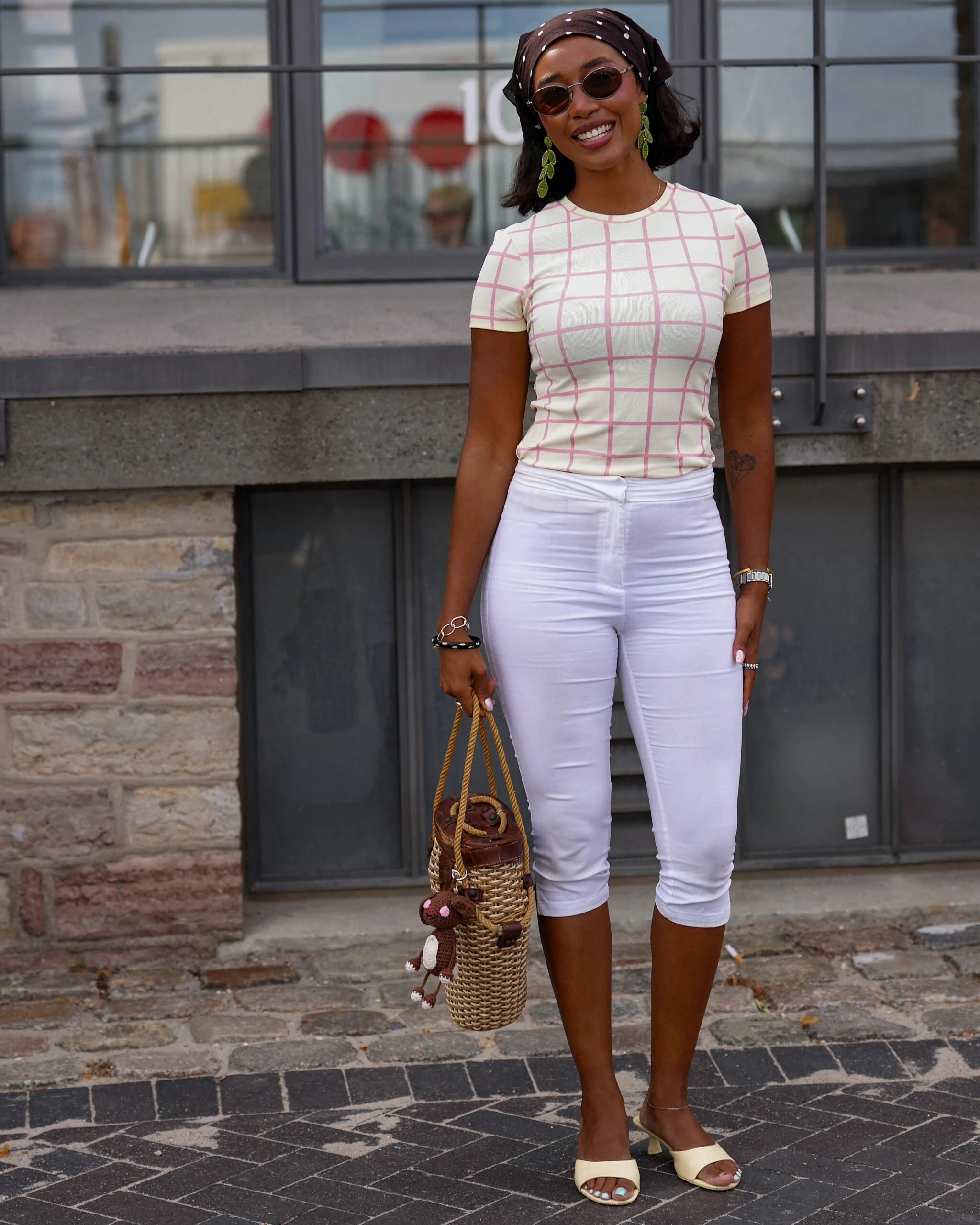
Capris, volume, and layering: silhouettes making a comeback
The revival of retro wardrobes also translated into the return of cuts that defined past decades. Capri pants and three-quarter-length trousers reclaimed the asphalt within the “bicycle chic” concept, paired with flats as well as low-heeled mules designed for comfortable movement. Meanwhile, balloon pants, with their characteristic leg volume and roomy fit, consolidated as the new classic of the wardrobe.
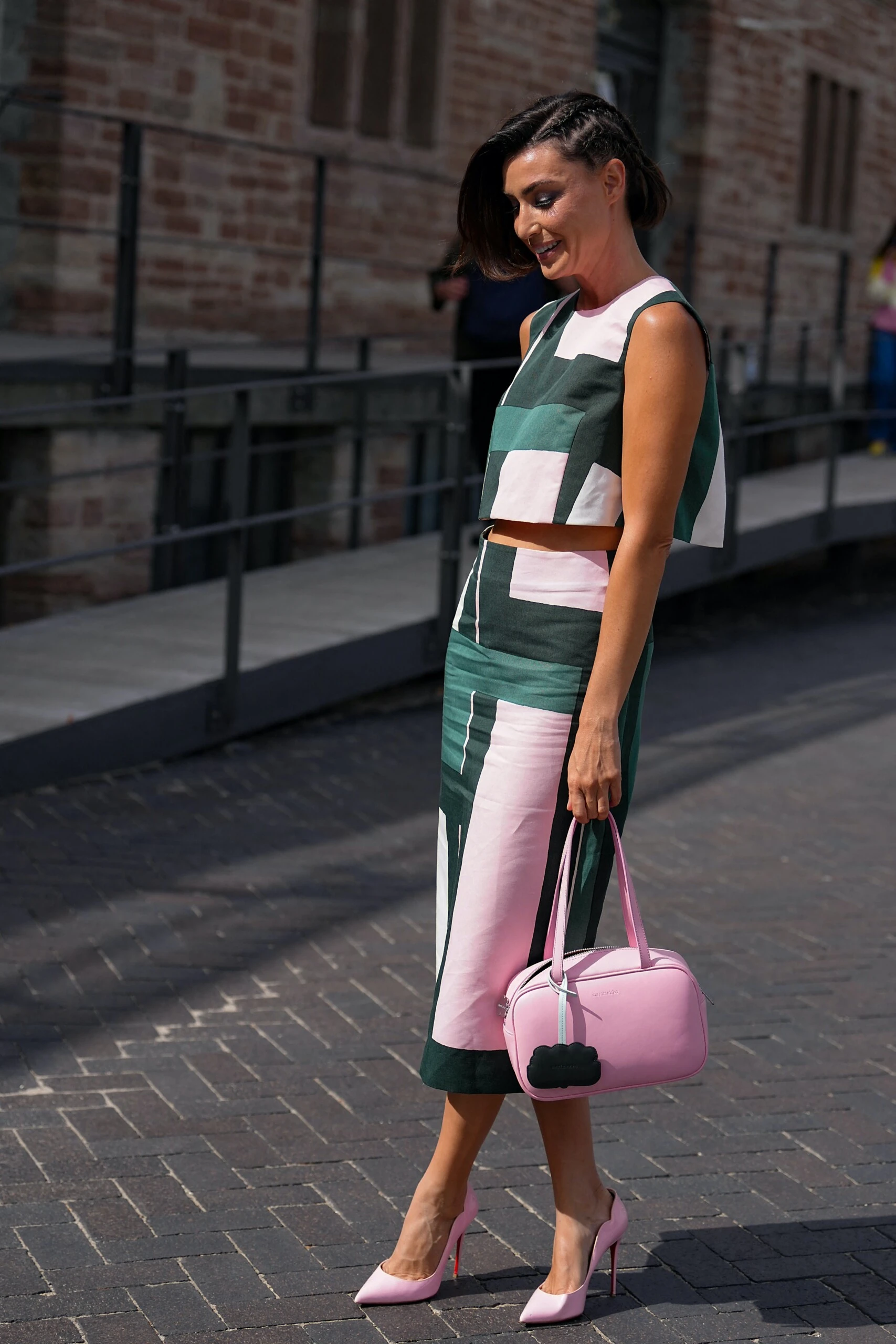
Another narrative layer seen on the streets was a direct nod to the 2000s through layering dresses over pants. Wearing minidresses or lightweight tunics over jeans or dress pants once again became a valid and bold option to give a second life to items that might have been forgotten at the back of the wardrobe.
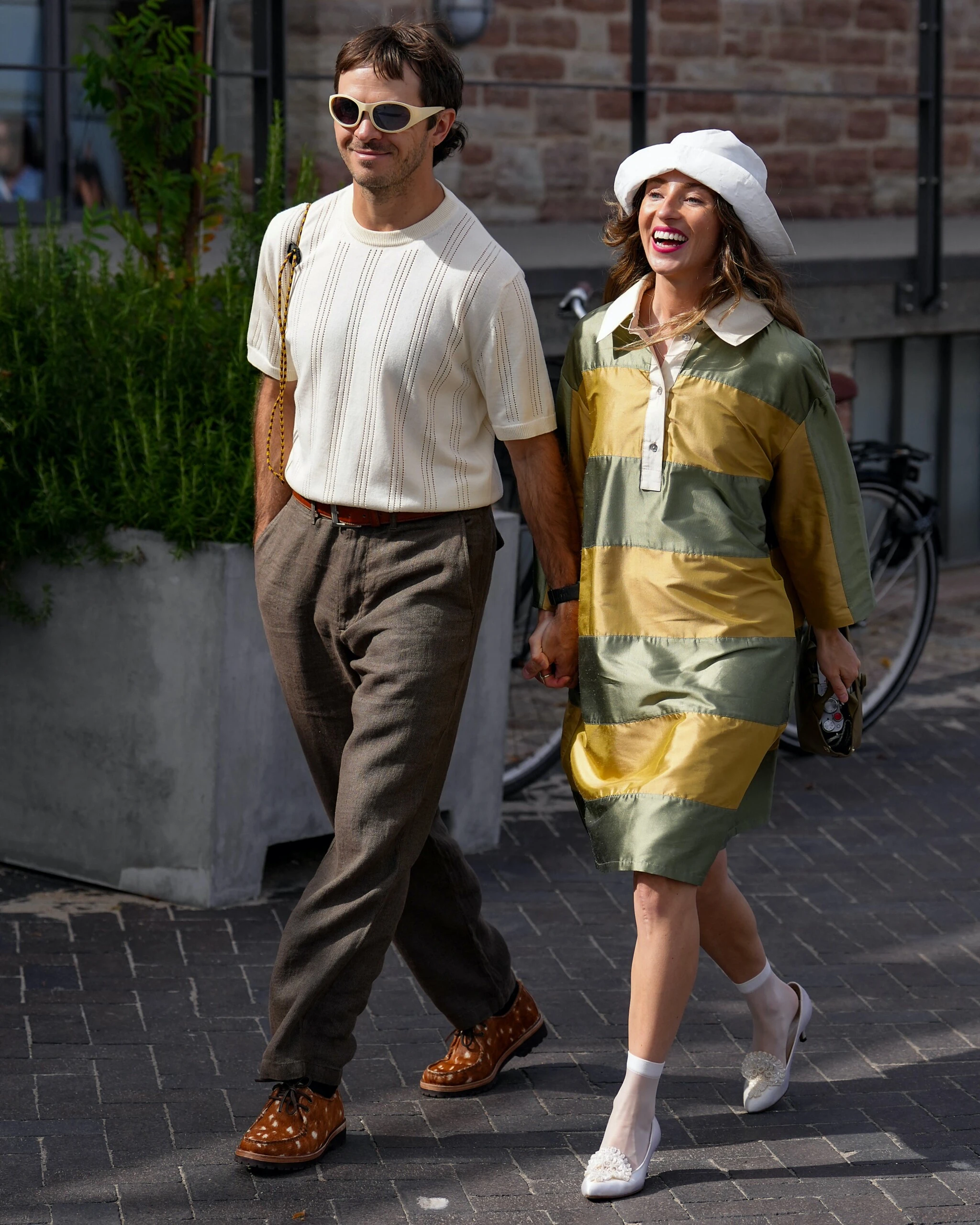
Sporty cues and textile details for everyday wear
The fusion of the old with the functional found its perfect balance in the presence of sport-inspired raglan tees, with their contrasting sleeves, paired with decorated pencil skirts or satin garments. Once again, the clash of styles demonstrated that today’s fashion is built through a dialogue between eras.
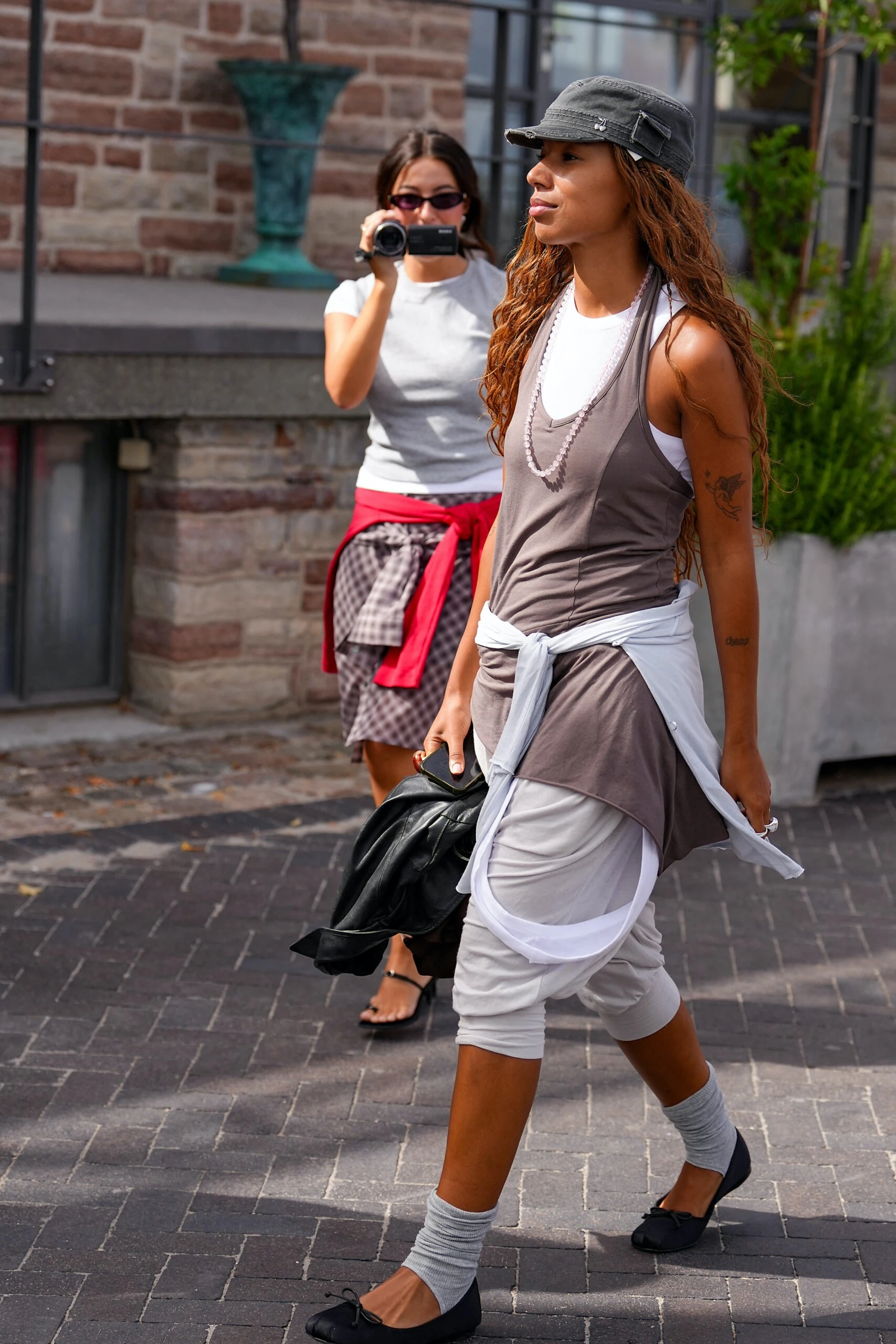
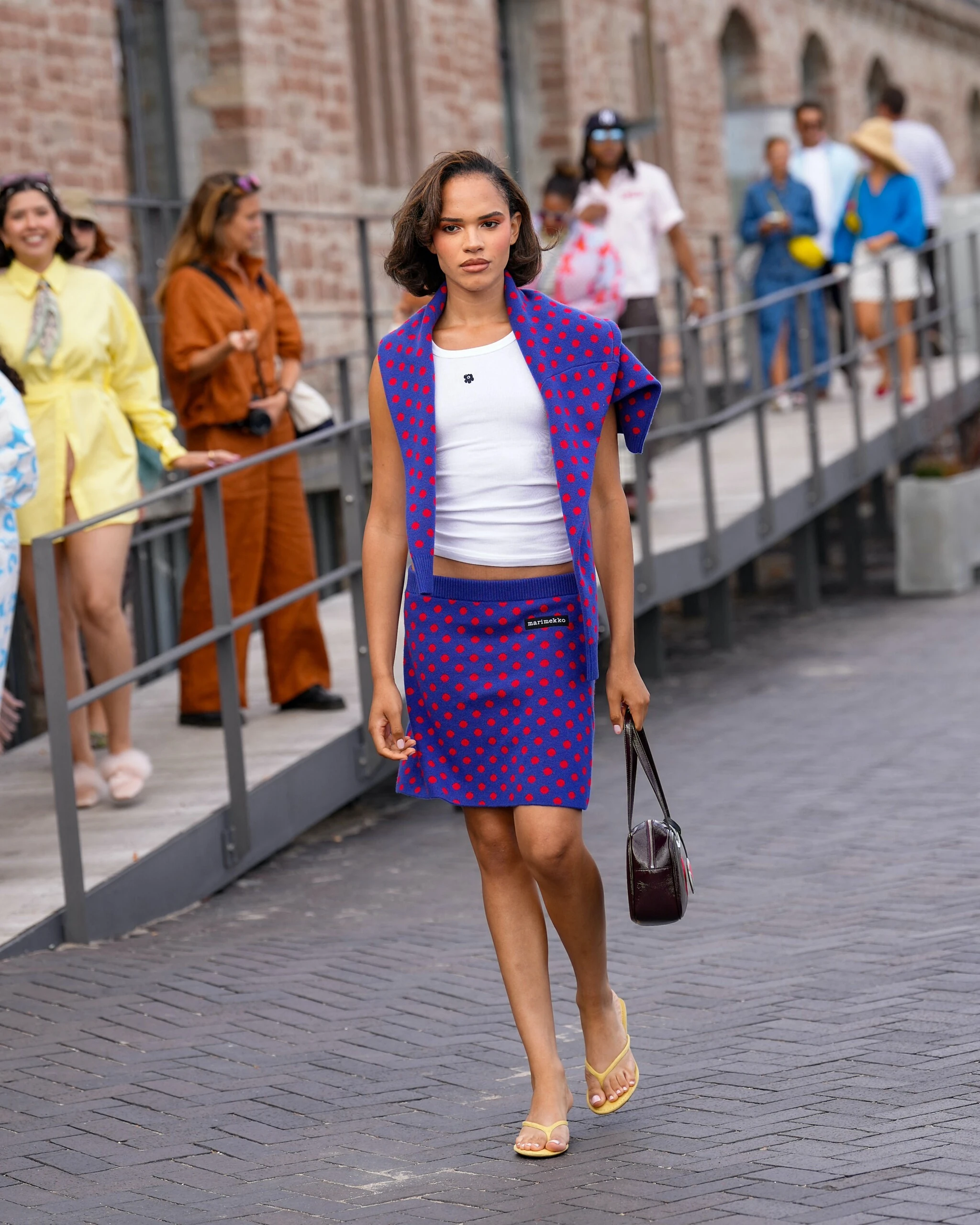
To crown the looks, attention turned to artisanal and informal details: crochet-knit hats, retro-inspired polka dot prints, and flat leather slide sandals. A proposal designed to inhabit the city with comfort and elegance, reminding us that the best style stories are often already written in the garments we inherit.