
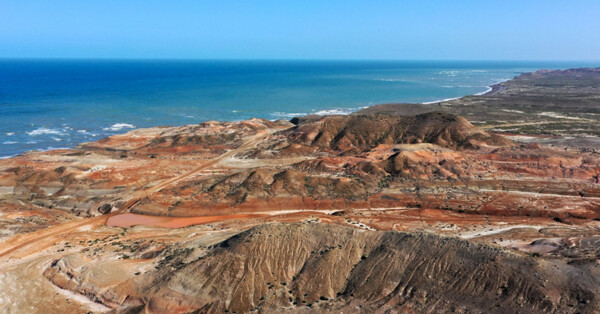
From the geological vastness of Rocas Coloradas at the southern tip, through the rugged refuge of Camarones, and reaching all the way to Trelew, the coast of Chubut stitches together an itinerary of captivating and diverse landscapes. An invitation to explore pristine marine environments, fishing towns with a strong maritime identity, and the planet’s only corner where it is possible to observe the legendary sei whale up close.
The visual history of Patagonia is often told from the grandeur of the Andes, as if the charm of the south ended at the snowy peaks and the ancient forests.
Yet, in the eastern edge of Chubut province beats an ecosystem where prehistory, the power of the ocean, and a breathtaking biodiversity demand their own protagonism. That vast and long misunderstood territory now finds its channel through the Azul Patagonia Route, a coastal trace that positions itself among the most captivating and least explored journeys of southern South America.
This itinerary was conceived as a natural corridor that links ancient fishing coves, crossing recently created protected natural areas such as the Patagonia Azul Provincial Park, and towns with modern infrastructure. The Atlantic Ocean acts there as a beacon guiding travelers along hundreds of kilometers where the wind has sculpted impossible cliffs and protected refuges of wildlife that have remained intact for millennia.
The Southern Gateway and a Landscape Wrenched from Another Planet
The natural starting point to begin this journey is the city of Comodoro Rivadavia, which has firmly embraced its role as the southern frontier and the main gateway to the coastal corridor. The calling card in this sector is the Protected Natural Area Rocas Coloradas, accessible via the town of Caleta Córdova, a few kilometers north of Comodoro Rivadavia.
It is a geological sanctuary where clay formations take on coppery, ochre, and red hues that plunge into the blue waters. Traversing the Lunar Valley or the Meteorite Hill in that setting yields a captivating sensory disorientation that breaks any conventional landscape mold.
The visual magnitude of the area is completed by the presence of a petrified forest whose fossil trunks have been embedded in the arid soil for more than sixty million years. Regarding this heritage, the director of Tourism in Comodoro Rivadavia, Eduardo Carrasco, highlighted its strategic value for transforming the travel map along the coast.
The official emphasized that having such a unique geography allows them to cease being seen merely as a waypoint city and to become the starting point of an incredible and singular experience, driven by an iconic landscape that “evokes Mars, but with the ocean as its stage.”
From the Red Geology to the Rustic Camarones Sanctuary
The secret to the route’s success lies in a deep transformation of how municipalities and the province’s attractions are linked. In the design of the Ruta Patagonia Azul, a cooperative fabric connects Comodoro Rivadavia with Rada Tilly, the picturesque coastal neighborhood of Caleta Córdova, the historic town of Camarones, the Rawson area near Trelew where the route ends.
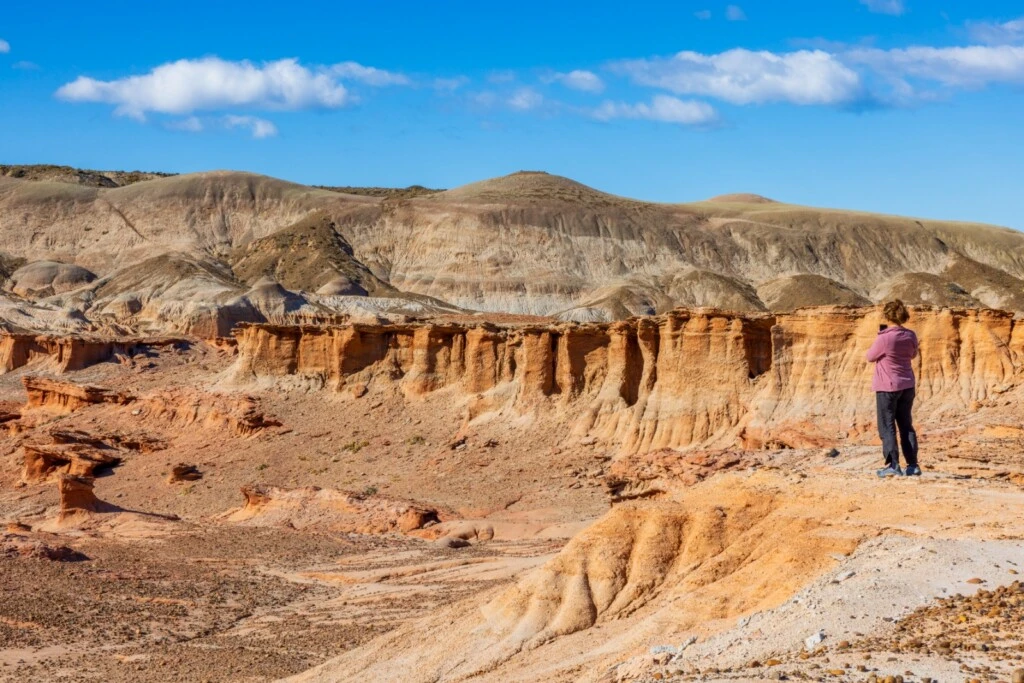
Carrasco explained that the driving idea is not for towns to compete to keep travelers, but to achieve an intelligent articulation where “each one complements the other and encourages continued exploration.” From Rocas Coloradas, near Caleta Córdova, through Bahía Bustamante, the Isla Tova gateway, reaching Cabo Dos Bahías near Camarones, continuing upstream by Cabo Raso and then Punta Tombo, up to Rawson and Trelew, there are countless attractions and reasons to be amazed.
That continuity on the map allows the journey to flow harmoniously from the geological awe of the south toward the marine heart of the provincial center, where the vast expanse of the Patagonia Azul Provincial Park and its archipelago of sixty islands off the Camarones coast unfolds.
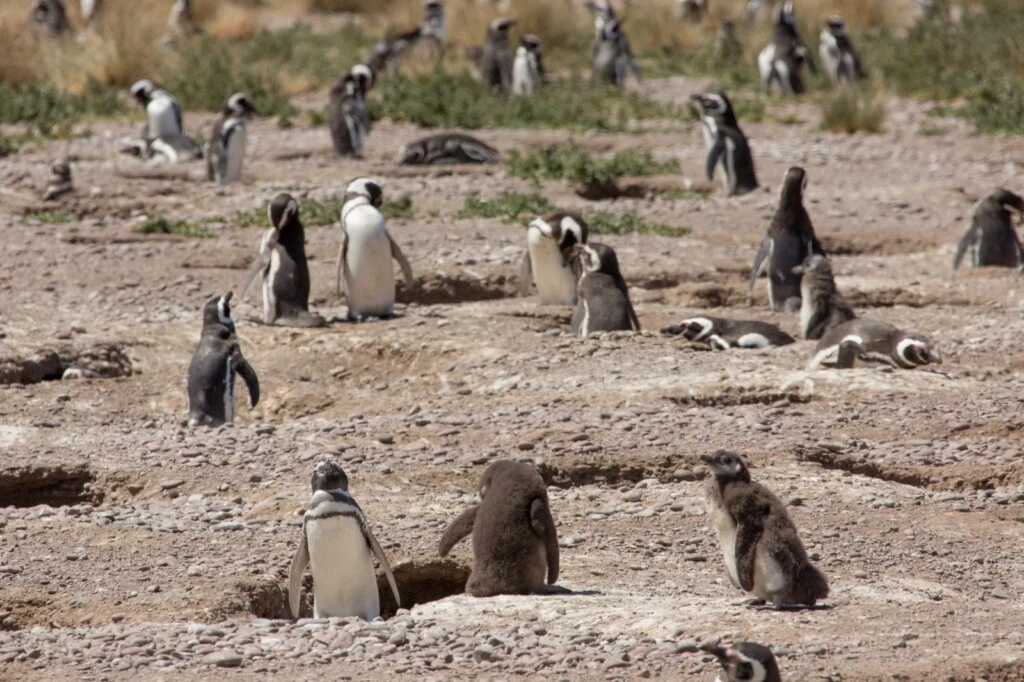
Around these islands, navigated with local guides, a wide variety of marine species can be observed—from cormorants, shearwaters, to Magellanic penguins, humpback whales, common dolphins, among others. In that constant passage, each stop yields discoveries ranging from sites with remains of ancient camelids and the famed proto-platypus to solitary walks along extensive beaches where coastal wildlife does not fear human presence.
The Sei Whale and the Nautical Tourism Revolution
Beyond the steppic magic and the colored cliffs, the great revolution of the itinerary happens offshore. The San Jorge Gulf has, in recent years, become the backdrop for one of the region’s biggest milestones in ecotourism and marine science thanks to the sustained presence of the sei whale. This imposing cetacean is recognized by researchers as the third-largest whale species on the planet and undeniably the fastest swimmer among all world oceans.
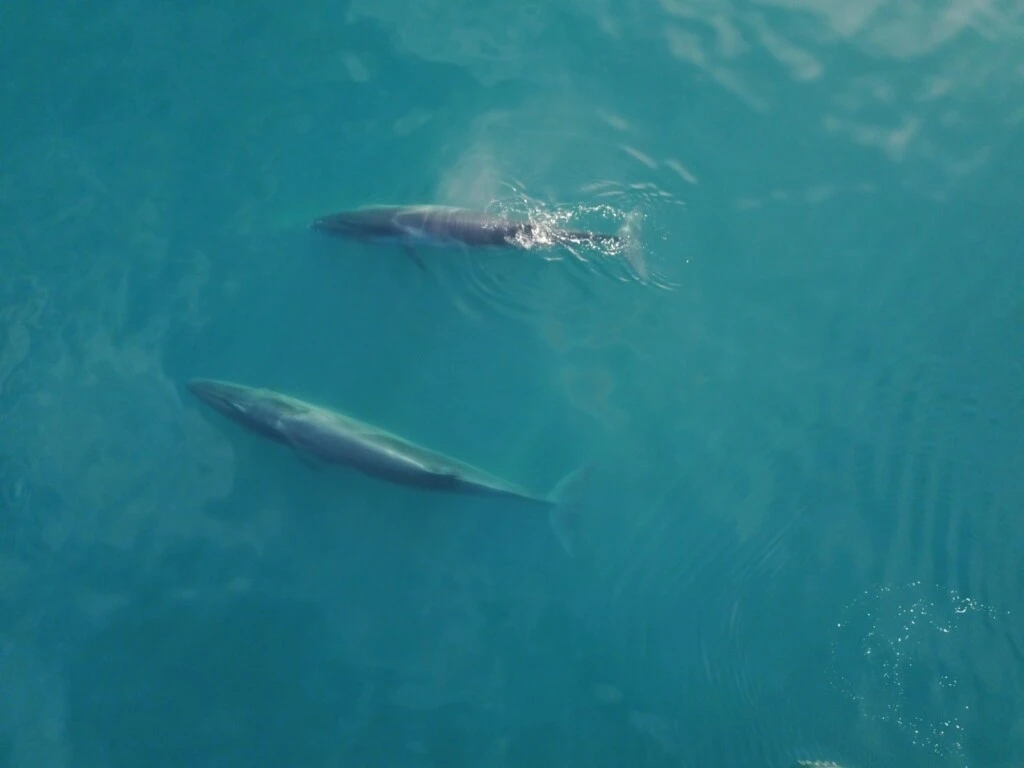
Its feeding habit in these southern waters opened an unprecedented opportunity for respectful wildlife observation. Carrasco valued the impact of this phenomenon that blends science and adventure into a single tourism product, proudly noting that Comodoro Rivadavia has become today “the only place in the world where this can be observed from tourist boats at such close range.”
In the coming months, new proposals such as diving and snorkeling with sea lions among macroalgae forests will be added, activities that can be undertaken very close to the city center of Comodoro Rivadavia.
Independent Explorers and the Push Inland
Among today’s visitors there is a prevailing current of independent travelers, couples, and small groups with a special sensitivity toward conservation, nature photography, and rugged hiking. The route’s integration has changed travel rhythms, as those who once stayed only one night before continuing on to other destinations now find ample incentives to plan week-long journeys exploring each coves and coastal refuges.
This shift in the dynamics of tourist flow generates a direct economic injection into lodging, gastronomy, specialized guides, and shops at each stage of the journey. By distributing the visitor flow throughout the year, the Azul Patagonia Route manages to break traditional seasonality and confirms that southern Argentina still holds secrets capable of taking your breath away for those willing to explore the vastness of its coastline.