
Every so often a new generational label begins to show up in the media, on social networks, and in everyday conversations. It happened with Millennials, then with Generation Z, and more recently with Alpha. Now it is the turn of the Generation Beta, composed of children born from 2025 onward.
Far from being merely a trend, these labels aim to explain how historical context, technological advances, and social changes influence how each group grows. And, although there are no official or universal boundaries, many experts agree that the Generation Beta will be the first to develop in a world where artificial intelligence is part of daily life from its earliest years.
What marks the start of a new generation?
Although many people believe generations shift because a new decade or a new century begins, there really is no established date by law nor an official body that determines them.
Generations are categories used by demographers, sociologists and researchers to group people who shared similar experiences during their childhood and adolescence. The aim is to understand how certain historical events, technological advances, economic changes or cultural transformations can influence the way they learn, work, communicate and relate to the world.
Therefore, the boundaries between one generation and the next are approximate and can vary depending on the researcher. However, there is a fairly widespread consensus about the dates that identify the best-known generations.
From Baby Boomers to Generation Beta: the map of the generations
| Generation | Years of birth | Distinctive traits |
|---|---|---|
| Baby Boomers | 1946-1964 | Grew up in the postwar era, during an economic expansion with television as a major protagonist. |
| Generation X | 1965-1980 | Lived through the transition from analog to digital and witnessed the arrival of personal computers and the internet. |
| Millennials (Generation Y) | 1981-1996 | Were the first to integrate the internet into daily life and witnessed the birth of social networks. |
| Generation Z | 1997-2012 | They are considered digital natives: they grew up with smartphones, social networks and constant access to information. |
| Generation Alpha | 2013-2024 | Born surrounded by screens, virtual assistants, streaming and digital education from early years. |
| Generation Beta | From 2025 | Projected to grow up with artificial intelligence integrated in education, home, health and much of their daily life. |
What will make Generation Beta different?
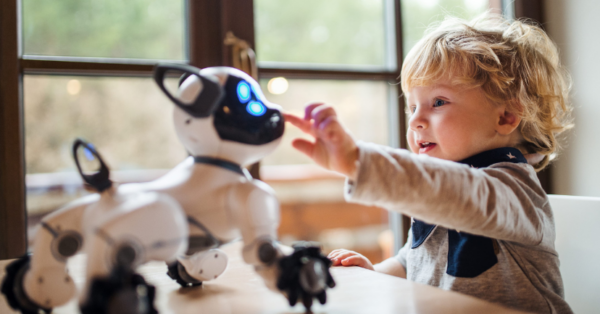
If Millennials were the internet generation and Generation Z the smartphone generation, many experts believe that the Generation Beta will be remembered as the first to live with artificial intelligence from birth.
For these kids, using smart assistants, interacting with devices capable of answering questions, learning with AI-personalized tools, or coexisting with automated processes will be as natural as today’s younger generations’ use of a cellphone.
In addition, they will grow up in a context marked by other major challenges and transformations:
- Artificial intelligence in everyday life. AI will be present in education, health, entertainment and many daily tasks.
- Ever more personalized learning. Digital tools will be able to adapt to each student’s pace and needs.Greater automation. From transportation to shopping or health services, they will live with intelligent systems in nearly every domain.
- Hybrid experiences. The boundary between the physical and the digital worlds will become increasingly blurred thanks to immersive technologies and new virtual environments.
- Environmental awareness. Climate change, sustainability and energy transition will be central themes in their development.
- Diversity as part of daily life. They will grow up in societies where different family forms, identities and cultures are becoming increasingly normalized.
Why is Generation Beta being talked about now if they’re still babies?
Generations typically receive a name in their early years because researchers seek to identify the major changes that will mark those born within the same period.
That doesn’t mean that all people within a generation are the same or share exactly the same characteristics. Education, the country they live in, their economic situation or family culture also influence the development of each individual.
Hence, generational descriptions function as a tool to understand social trends rather than as a rigid definition of how each person will be.
A generation that will grow up in an entirely new landscape
Unlike previous generations, the Beta generation will probably not recall a world without artificial intelligence. Just as today it’s hard to imagine life without the internet or smartphones, for them living with digital assistants, intelligent technologies and automated processes will be part of everyday life.
Many years will still pass before we know how much of these projections will come true. But all signs point to the fact that children born from 2025 onward will grow up in a setting shaped by ever-accelerating technological advances, new environmental challenges and ways of relating to others that will be very different from those their parents—and even their older siblings—experienced.